29 June 2007

Corn's-A-Poppin' (ca. 1956)

Most bad films inflict their aesthetic injuries through blandness. A lumbering mistake like The Last Samurai or Four Daughters is especially infuriating because the very emptiness of the enterprise makes it difficult for the critic to enumerate objections. A few hours have been wasted, but the style and force of the thing are so elusive that the addled viewer can scarcely spin a yarn about the experience. Mediocre films yield, at best, an amnesic void.

Certain bad films stand up better to the outraged recounting. The Fountain, for example, leaves the viewer feeling short-changed but also refreshingly awake to a particularly uncomfortable brand of Kabala-inspired spirituality that seems endemic to pampered but disillusioned wunderkinds who’ve been dreaming up personal cinema since receiving a camcorder as a bar mitzvah gift. Yet even here that perverse interest only contributes to the unsatisfying tension of the thing: with such eccentric motivations underpinning the film, why is the final product ultimately kin to the least compelling brand of syndicated television?

The greatest kind of bad film opens up aesthetic territory that seems, if only in the dark, to dissolve the earnest impulse to proffer aesthetic evaluations at all. Such a film is Corn’s-A-Poppin’. It’s a backstage musical that most people, even connoisseurs of the genre, have never heard of, much less seen. It features no familiar stars and stands outside most simple means of classification. The only immediate reason to be interested in Corn’s-A-Poppin’ at all is that Robert Altman had a hand in the screenplay. He wrote it, obviously from hunger, while toiling away at short documentaries and television work. Exactly where it stands in his filmography is unclear; some sources date Corn’s-A-Poppin’ to 1951, others to 1956. The studious compilers of the AFI Catalog of American Feature Films admit that trade sources betray little about its production and that it would be presumptuous to assume that the film was ever exhibited in commercial cinemas at all. In a very real sense, then, Corn’s-A-Poppin’ lies outside of film history, as well it should be for such an awesome and unaccountable film.


Corn’s-A-Poppin’ was shot sometime in the 1950s in Kansas City by Crest Productions under the direction of Robert Woodburn, who also served as cinematographer. The sets look to be dressed-down television leftovers, which is actually appropriate, as the plot revolves around the trials of producing an inept program called The Pinwhistle Popcorn Hour. The show, a wild scheme hatched by marketing man Waldo Crummit (James Lantz) to boost sales for Thaddeus J. Pinwhistle (Keith Painton) hovers between an embarrassment and outright sabotage. In the first reel Waldo introduces Pinwhistle to his newest headliner, former hog-caller Lillian Gravelguard (Nora Lee Benedict) whose rendition of “Drink Only to Me” actually makes the anemic popcorn seem the rightful highlight of the program. Just about the only positive effect of this enterprise is the flirtatious manner affected by Pinwhistle’s “more-than-a-secretary” secretary Sheila (Pat McReynolds) and folksy Pinwhistle Popcorn Hour announcer Johnny Wilson (Jerry Wallace), whose charm helps viewers to forget that the show only runs half an hour. The only obstacle to their union is Johnny’s pushy juvenile sister Susie (Little Cora Rice) who orders him around like hen-pecking wife and airs her opinions about his TV show with minimal tact. Part of what makes Corn’s-A-Poppin’ so unaccountable is the way it moves effortlessly between studied sarcasm and tone-deaf line readings. Waldo Crummit seems like a creation shoplifted from a Frank Tashlin comedy—a vulgar show biz mover who profits in proportion to the talent’s bust. Most of his dialogue with Pinwhistle is surely meant to be understood as a thinly veiled jazz of a shyster howling at his crooked moon. When Pinwhistle finds Crummit making a deal with an executive at Chicago’s Crinkle Corn to swoop in and buy the company for ‘peanuts,’ Crummit deploys some improbable hooey about negotiating with a senator. The audience is clearly meant to take Crummit’s listless recitation as a bad joke. Likewise when he insists that the vocal talents of Miss Gravelguard are not a danger to Pinwhistle or his popcorn, reasoning that his business is about corn, not critics. Or when he laments a strain of ‘vocal cord-itis.’ These are low-rent one-liners and lame locutions infused with a consciously pathetic air apparent even to those in the rowdy back rows. Much in the same manner, Gravelguard’s singing is meant to be bad, horrendous, an ongoing train wreck of a thing. She becomes the butt and embodiment of a familiar joke about no-talent floozies crooning through a sea of cheap whiskey tears.

More famous musicals also have a good deal of fun at the expense of characters who can’t sing. Indeed, Jean Hagen’s dumb matinee idol in Singin’ in the Rain encapsulates the subject of that classic movie: the disjuncture between sight and sound. We laugh whenever Hagen opens her mouth and spews out lines in that fatuous Texan-New Englander drawl, especially when she tries to sing those lines. And it’s one of the glories of the Hollywood musical cycle when Ann Sheridan teaches an inept band of church ladies to sing the title tune in Take Me to Town. But Corn’s-A-Poppin’ possesses no correlative to Sheridan or, for that matter, Debbie Reynolds. In Corn’s-A-Poppin’ the intentionally incompetent performances exist side-by-side with and really indistinguishable from the merely misguided ones. How are we to reconcile the knowing dumbness of James Lantz’s performance and the near-documentary coyness of Pat McReynolds and Jerry Wallace? Keith Painton screams all his lines into an intercom, frets while twirling his girly fisticuffs, and always dances on the line of being hip to the whole ploy but never quite crosses it. In other words, a film that takes as its subject the effect of bad performances, amateur theatrics, impoverished plot twists, and end-of-the-tether desperation and yet is replete with all these.

Woodburn shot the film in a strange yet affecting style. Despite Corn’s-A-Poppin’ being shot with a dash of midnight oil on tawdry television sets, it does not deploy the television style of multiple cameras recording simultaneously from many pleasantly-lit angles. Most of the scenes are one-take wonders, sometimes spoiled by an unexpected cut-in. The lighting is of the lowest possible quality: while the figures are always intelligible, shadows begin to converge whenever one walks towards the corner of a room. The act of opening a door becomes a kaleidoscopic moment when the set is lit with half a dozen stray fill-lights. The film’s intended aspect ratio is also something of a puzzle. The credits fill the 1.37 frame with relevant information, but most of the shots look shoddily composed for the sub-Cinemascope flat matting so prevalent during the American conversion to widescreen. Most films shot to accommodate varying exhibition ratios center all the action in the frame, leaving dead air at the top and bottom that a projectionist could chop off without any dramaturgical loss. Not so with Corn’s-A-Poppin’ where the characters hover towards the bottom half of the frame, leaving empty spaces (bare walls, kitchen cabinets, windows looking out on nowhere) in the upper half. It’s almost as if Woodburn and his crew could only afford a tripod that rose four feet too high.

All of the incompetent evidence on screen is so singularly wrong to make chalking it up to a simple foul too dismissive. Corn’s-A-Poppin’ ignores, defies, and denies all established rules of composition. Woodburn’s film reminds us anew of the aesthetic reasoning in the ‘invisible’ codes of Hollywood filmmaking; it demonstrates the virtues of staid visual harmony by presenting an alternative so ludicrous as to be entrancingly primitive. This film so upsets our notion of cinema that calling it ‘bad cinema’ would miss the point.

That said, Woodburn, Altman, and their actors should not necessarily be credited with a concrete point, per se. One of the most beguiling qualities of the film is the ambiguity (previously discussed) about when or if the film crosses between deliberate joshing and authentic ham. Did the actors mean us to laugh at their every interjection? Is this straight or camp avant la lettre? The performance style is the logical extension of the one presented by J.S. Watson in his modernist masterpiece Tomatos Another Day, a spoof of the early talkies and their supposedly wooden line readings. But here the intent of the enterprise is much hazier. In the middle of Johnny Wilson’s first rendition of ‘Running After Love’ number (which began with Johnny robotically inching his way towards Shelia on his couch, a mix of satiric reserve and its failed realization) the star turns towards the camera for half a line and then proceeds to sing with his back to it once more. This is a moment of disarming life that, intentionally or not, completely removes the viewer from the diegesis of the film and turns that viewer towards contemplation of the film not as a narrative but as a precious document of non-professional actors ambling towards expression. When he performs ‘Running After Love’ again on the air as the film’s finale, Wallace makes literal the song’s title, prancing back and forth in a straight line with all the panache and painful limitations of the first Vitaphone performers.


The emotional heart of a picture filled with obtusely intimate moments is the penultimate number, “On Our Way to Mars.” It has the greatest build-up of all the numbers, with little Susie begging her brother to be allowed to sing with him on the air. The result is a piece of minimalist s-f: Susie and Johnny float in a cardboard rocket while crooning about finding a grilled cheese sandwich on the moon. They set up rhyme schemes and then abandon them, finishing couplets with ‘Zoom! Zoom!’ It’s a creepy number, filled with romantic and sexual overtones—already present from the first reel of Corn’s-A-Poppin’ during which we’re not quite sure whether Susie is Johnny’s sister or his midget bride. (Susie speaks with all the bluster and toughness of a boozed-out Hollywood sideshow, cooks all of Johnny’s meals in an apron, and possesses a disposition very unbecoming of a child star.) But “On Our Way to Mars” becomes unexpectedly moving when Johnny sings about ‘dreams in Cinemascope,’ a timidly self-conscious expression about the kind of ragged, desperate movie that Corn’s-A-Poppin’ must be. Its actors will never see their names on a marquee or headline a Hollywood production; the reference to unattainable aesthetic luxuries has the effect of reminding us that Corn’s-A-Poppin’ constitutes a wooly alternative to them. The enterprise is so small-time that most of the performances come across better and stronger as documentary records of deer in the proverbial limelight. Intentionally or not, local acts of guerilla cinema like Corn’s-A-Poppin’ unleash a torrent of poetic feeling and reveal a new territory in film aesthetics.

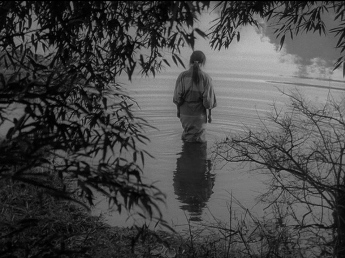
20 March 2007

La Habanera (1937)

Made by Detlef Sierck (soon to be Douglas Sirk) in 1937--the same year that the Nazis became major shareholders in UFA--La Habanera is a minor melodrama that should prove interesting to Sirkophiles and students of the Third Reich. The story concerns Astree Sternhjelm (Zarah Leander), a Swedish bourgeois vacationing in Puerto Rico in the late twenties who becomes enamoured of Don Pedro de Avila (Ferdinand Marian), a hacienda hussy and occasional matador who sweeps the repressed Astree off her feet as only the Other can. She ditches the return leg of cruise to marry Don Pedro, who soon proves to be a tyrannical reverse-colonizer who oppresses the body politic and sexual in an obliquely melodramatic manner.

This part of the picture is the most interesting--a kind of shotgun marriage between melodramatic bathos of the kind Sirk would perfect at Universal in the 1950s and the lurid jungle thrills seen in
East of Borneo (1931), King Kong (1933), and other American genre programmers of the thirties. La Habanera shares with Val Lewton's I Walked with a Zombie (1943), the culmination of the latter cycle, a remarkable atmospheric tendency--as if the presence of palm fronds alone gave the director and cinematographer license to coat the frame in five or six layers of intersecting shadows. As a melodrama, the film is compelling if considerably less complex--the oppressed wife story is well shot but never aims to position itself in the middle of the social and economical matrices into which Sirk's finest melodramas (All That Heaven Allows, Imitation of Life) fit so perfectly.

As the film progresses, it becomes bogged down in third-rate Nazi propaganda. As if the abuses of the lusty Don Pedro were not sufficient grounds to prove the inferiority of non-Aryans,
La Habanera becomes wrapped up in demonstrating the weakness of the Central Americans through a mysterious 'Puerto Rican Fever' that sweeps the village. Cops and civilians faint and fade into comas in a wincingly literal testament to biological superiority of the Master Race. There's also some business with two doctors (one Swedish, one Brazilian) flown in to investigate the matter, much to the tourism-centered chagrin of Don Pedro. Their plodding fact hunt recalls the Raymond Burr scenes in the American version of Godzilla.

17 March 2007

Maurice Tourneur

The reputation of Maurice Tourneur has scarcely been a matter of dispute among cinephiles. As is the case with Frank Borzage, there are Tourneur partisans on the one hand and those unacquainted with Tourneur on the other. Most of us who were never personal students of William K. Everson fall into the latter category. A half-sincere point of genuflection, Maurice Tourneur is today probably best remembered as the father of Jacques Tourneur.

I certainly knew nothing about the director or his films until I accidentally caught a screening of his 1915 production of Trilby in a pristine, tinted 35mm copy from George Eastman House. Trilby features many striking scenes and staging effects, not least one long take in the first or second reel that includes (if I recall correctly) a topless Trilby in the foreground posing for a cadre of artists dotting the background while other bohemians frolic in the hallway at the right of the frame—everything in crisp, deep focus and rather delicately staged.

Giddy with a false sense of discovery, I lobbied to mount a Tourneur retrospective at my film society. The Library of Congress, for those interested, holds archival prints of The Wishing Ring (1914), Alias Jimmy Valentine (1915), A Girl’s Folly (1916), The Pride of the Clan (1917), The Poor Little Rich Girl (1917), The County Fair (1920), Das Schiff der verlorenen Menschen (1929). These titles, along with his Volpone (1939), comprised the retrospective that ended last week.

I sold the series on some rather extravagant claims sheepishly reprinted below:
At the height of his career, Maurice Tourneur enjoyed a reputation on par with his great contemporary and rival, D. W. Griffith. While Griffith’s editing evinced a purely cinematic mastery, Tourneur’s style both avowed and transcended its debt to painting and theater. An exponent of studio sets and other artificial handicraft, Tourneur favored tableaux shots with achingly precise staging and a full spectrum of lighting tones. More than thirty years before Citizen Kane Tourneur perfected a complex deep-focus style wherein his actors moved freely between lavishly decorated foregrounds and backgrounds. His long shots were often awash in shimmering Pictorialist touches, compelling critics of the time to recognize his artistic temperament.
Having now seen all of the films mentioned above, this appreciation applies best to Trilby and less well to the others. It’s still broadly accurate, but more importantly seeing the other films helps to clarify the style of Trilby. Its takes are atypically long and rich, almost amplifying the style of the major films that surround it with a near-parodistic intensity. Trilby remains—along with Ford’s The Long Voyage Home, Mizoguchi’s The Loyal 47 Ronin, Murnau’s Faust, and Sokurov’s Russian Ark—one of those anomalies of film history, a feature-length exercise in mise en scene seemingly constructed for the delight of game cinephiles.

The claim about Tourneur’s relation to Griffith still sounds credible to me. Tourneur’s major films emerge in that great anarchic period of the mid-teens before the complete codification of Griffith’s continuity system. Not so much a superior system as a fascinating road less traveled, Tourneur’s style demonstrates the sophistication of early film staging that seems doubly compelling today because his particular innovations have not been diluted by narrative filmmakers laudable and talentless over the past ninety years. (If anything, a familiarity with Tourneur’s films, as well as the contemporaneous productions of Cecil B. DeMille, actually gives us a richer sense of Griffith’s art by recovering the aesthetic singularity of his style; rather than a fait accompli of narrative cinema, The Birth of a Nation, viewed alongside Trilby and The Cheat, becomes a great gamble of causal conceit and emotional effect—but one of several stylistic possibilities for cinematic expression that unluckily became the dominant one as the industry solidified.)


On to the films themselves: along with Trilby, Alias Jimmy Valentine is the greatest tour de force, featuring one startling sequence after another: an introduction wherein Jimmy’s clothes change from debonair to felonious with an early jump cut; a robbery staged in a single take, shot on a large stage from a very high angle that takes in a dozen interconnected rooms; a train caboose brawl that anticipates the delicate interplay of lighting and motion found in the streetcar sequence of Murnau’s Sunrise. The finale is a highly tactile test of will through which Tourneur proves a master of detail.


Most of the other films are more overtly charming, though hardly slight. The Wishing Ring and A Girl’s Folly stage highly charged meetings across multiple planes in pastoral utopias. With Tourneur, it’s always necessary to watch a middle ground conversation without losing sight of the waifs and nymphs fluttering across the edge of the frame, a decorous and decorative detail, but also perhaps the filmmaker’s most distinctive. (His silent chorus line of nymphs has something of an afterlife, oddly enough, in the comedy relief ballerinas of the Lon Chaney version of The Phantom of the Opera.) In any case, the early features possess a critical economy of expression—rather than representing another strain of the much-ridiculed theatrical timidity of early ‘quality’ productions, these films betray a highly cinematic understanding of deep staging where cuts come into play only when the visual rhetoric of the blocking has been exhausted.

As history progresses and the ‘Classical Hollywood Style’ asserts its gathering hegemony, Tourneur’s film lose a slight degree of their uniqueness. In fact, the pivotal stylistic changes dated to 1917 by David Bordwell, Kristin Thompson, and Janet Staiger receive their most forceful demonstration with a single viewing of Tourneur’s Pickford pair of that year. Here the staging matters less (and the cutting consequently more) than in the previously films, though the deep focus composition is still preferred to the close-up. Though editing was evidently not Tourneur’s forte, his early attempts are quite revealing: the abrupt proto-montage of Pickford, the villagers, the homes, and the sea in The Pride of the Clan trigger a reaction analogous to the flow of images of countryside and chateau constructed by Epstein eleven years later in his Fall of the House of Usher.

The films made after 1917 are less interesting, though his charming version of The Blue Bird
should clearly be counted among his finest efforts—a series of tableaux, yes, but the most carefully lit and attired ones imaginable, surpassing even Méliès. Last of the Mohicans, largely shot by Clarence Brown following a detailed plan from Tourneur, suffers from Tourneur’s indifference to locating shooting, but still largely succeeds on its own melodramatic terms. The less said about The County Fair the better; not even rigorous mise en scene can redeem this impossibly retrograde, gussied-up junior high school play. Tourneur milks the reactionary quaintness for all its worth and acquits himself about as well as the material allows.

Das Schiff der verlorenen Menschen
is six reels; it could stand to be five or even four and a half, but it is not without its highlights, not least a backwards tracking shot that reveals every crusty crevice of the eponymous schiff. This German effort and Volpone feature a much more active camera than the features of the teens; part of this is surely due to the prevailing fashion (with Murnau, Vidor, and L’Herbier at the height of their powers), but a good deal also seems to me like an aesthetic translation in the best sense. Though not as rich as the tableaux shots of old, the complex tracking shots in late Tourneur convey a similar hunger for detail and texture packed to the very edges of the frame.


For those interested in Tourneur, film literature provides few references: an anecdote here or there in Kevin Brownlow’s
The Parade’s Gone By… and Edward Wagenknecht’s Movies in the Age of Innocence but little more. There’s also a monograph by Henry Waldman (in-print from McFarland) that seems largely constructed from trade reviews rather viewing of actual prints. For my money, the best introduction remains Richard Koszarski’s ‘Maurice Tourneur: The First of the Visual Stylists’ from the March 1973 issue of Film Comment. The other extant films of great interest appear to be Prunella, Lorna Doone, Woman (Tourneur’s waifs-through-the-ages homage to Intolerance), Mysterious Island (his last Hollywood film, which survives only in a black and white rendition of the original two-color Technicolor photography), and, from the French period, Justin de Marsaille.

17 February 2007

Take One

With much trepidation, I have decided to begin a cinema blog. Ego accounts for 75% of this decision, but another quarter comes from a genuine sense of duty.

Last month Dave Kehr noted off-the-cuff in his blog:
I have problems with many of the younger Internet writers, who don’t seem to have seen any movies older than they are. I still think the only way to become a productive critic is to absorb as many movies as possible: you get the feeling that many of the Internet boys (and boys, of course, they mainly are) think that Michael Mann invented deep focus or that Terrence Malick invented associative montage. This is not a function of age but of commitment: if you love your art, eat it up.
Gender and age are not mutable, but taste and interest certainly are. This blog will largely chronicle my musings after random screenings with an emphasis on the historical implications of film style. Watch this space for a long post on the films of Maurice Tourneur in the next few days.

--Kyle